
You’re planning a commercial construction project, ordering custom equipment components, or developing a new product for your Phoenix business. You’ve worked out the dimensions, identified how the finished part needs to function, and established a budget. However, there’s one important decision left to make: which metal should you use?
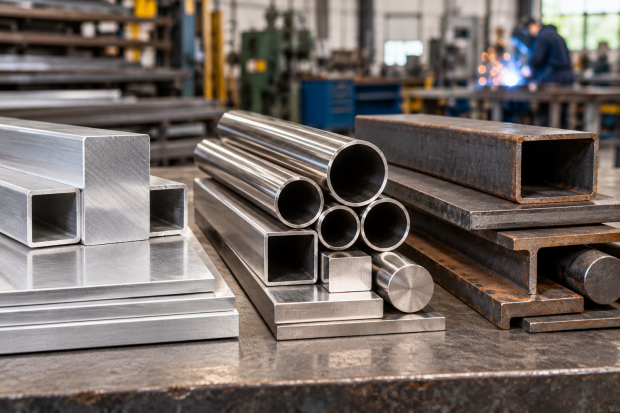
Aluminum, stainless steel, and carbon steel are three popular materials for custom metal fabrication, but each offers different advantages. Aluminum is lightweight and naturally corrosion-resistant, stainless steel provides excellent corrosion resistance and a clean appearance, and carbon steel offers strength and versatility at a generally lower material cost.
The right choice depends on how your finished component will be used, the conditions it will face, and the performance requirements it must meet.
Here’s a quick breakdown of the differences:
- Aluminum: A lightweight, corrosion-resistant option for equipment components, panels, enclosures, and applications where reducing weight matters.
- Stainless steel: Often preferred for components exposed to moisture, cleaning chemicals, or environments requiring a durable, attractive finish.
- Carbon steel: A versatile choice for structural components, machinery supports, frames, and applications requiring strength at a competitive cost.
- Galvanized steel: Offers a protective zinc coating that helps carbon steel resist corrosion in many outdoor environments.
- Material selection: Strength, weight, exposure conditions, fabrication requirements, appearance, and total project cost should all influence your decision.
At Metal Pro Inc., we’ve provided metal fabrication in Phoenix, AZ, since 2000. Our experience working with aluminum, stainless steel, mild steel, galvanized steel, copper, brass, and various types of steel pipe and tubing allows us to help businesses explore material options for their specific fabrication requirements.
Aluminum vs. Stainless Steel vs. Carbon Steel: What’s the Difference?
The main differences between aluminum, stainless steel, and carbon steel involve weight, strength, corrosion resistance, fabrication characteristics, and cost. Aluminum offers substantial weight savings, stainless steel provides strong corrosion resistance, and carbon steel is often an economical choice for components that require strength and rigidity.
Although all three materials can be used in commercial and industrial applications, they aren’t interchangeable in every situation.
| Feature | Aluminum | Stainless Steel | Carbon Steel |
|---|---|---|---|
| Weight | Lightweight | Relatively heavy | Relatively heavy |
| Corrosion resistance | Good in many environments | Generally excellent, depending on grade | Usually requires protection |
| Strength | Varies by alloy and temper | Varies by grade | Varies by grade |
| Appearance | Clean, modern finish | Attractive, often polished or brushed | Usually painted or coated |
| Material cost | Often moderate to high | Generally higher | Generally lower |
| Common applications | Panels, enclosures, lightweight parts | Food equipment, exposed components, fixtures | Frames, supports, machinery components |
For Phoenix-area contractors and manufacturers, understanding these distinctions can help prevent costly material changes once fabrication has started.
When Is Aluminum the Best Choice for Metal Fabrication?
Aluminum is often the best choice for fabrication projects requiring lightweight components, good corrosion resistance, and manageable handling or installation requirements. Its relatively low density makes it attractive for equipment parts, transportation-related components, architectural features, and other applications where unnecessary weight creates challenges.
Lightweight Construction and Equipment Components
Aluminum weighs roughly one-third as much as steel by volume. This difference can be valuable when manufacturing portable equipment, large panels, or components that must be lifted and installed.
For example, a Phoenix manufacturer designing a removable equipment enclosure may prefer aluminum because it reduces the weight workers need to handle. A construction company may also consider aluminum for certain nonstructural architectural components.
However, aluminum generally has a lower elastic modulus than steel, meaning an equally shaped component will typically deflect more under the same load. Engineers may need to adjust dimensions or thickness to achieve the required stiffness.
Corrosion Resistance in Arizona’s Climate
Aluminum develops a natural oxide layer that helps protect it against many forms of corrosion. This can make it useful for outdoor installations throughout Phoenix, Tempe, Mesa, and surrounding communities.
However, corrosion resistance varies by alloy and exposure conditions. Contact with incompatible metals, certain chemicals, or moisture trapped in joints can still create problems.
Aluminum fabrication also requires appropriate welding procedures, equipment, and material preparation. At Metal Pro, we offer aluminum welding and custom fabrication services for projects requiring these specialized capabilities.
Why Choose Stainless Steel for Custom Fabricated Parts?
Stainless steel is an excellent choice for custom fabricated parts that need strong corrosion resistance, durability, and an attractive finish. Its chromium-containing composition creates a protective surface layer that helps resist corrosion, making it particularly useful in commercial, industrial, and sanitary environments.
Applications Requiring Cleanliness and Durability
Stainless steel is frequently used in food-processing equipment, commercial kitchens, medical-related equipment, and industrial environments where cleaning and corrosion resistance are priorities.
For instance, a food-processing operation in Chandler may need custom metal components that tolerate frequent cleaning. Depending on the chemicals and operating conditions, an appropriate stainless steel grade may be preferable to uncoated carbon steel.
Appearance and Finishing Requirements
Stainless steel can also be a practical option for visible commercial components. Its polished, brushed, or other specified finishes can provide a professional appearance without relying on traditional paint coatings.
However, not every stainless steel grade performs equally. Common grades such as 304 and 316 differ in composition and corrosion resistance, so the intended environment should influence the choice.
Stainless steel fabrication may require specialized cutting, welding, and finishing procedures to maintain appearance and performance. Our experience with stainless steel welding and fabrication allows us to discuss these requirements during project planning.
When Does Carbon Steel Make More Sense?
Carbon steel often makes more sense when a project requires strength, rigidity, widespread material availability, and cost-effective fabrication. It’s commonly used for frames, brackets, structural supports, machinery components, and other parts where weight reduction or a corrosion-resistant appearance isn’t the primary concern.
Strength and Structural Applications
Many commercial construction and industrial projects throughout Phoenix rely on carbon steel components. Depending on the specified grade and design, carbon steel can provide the mechanical properties needed for demanding applications.
For example, a contractor working on a warehouse improvement near Sky Harbor may require fabricated supports, brackets, or equipment frames. Carbon steel may offer a practical combination of strength, availability, and fabrication flexibility.
For load-bearing components, the final material grade, dimensions, connections, and applicable design requirements must be established by a qualified engineer.
Cost and Fabrication Considerations
Carbon steel often has a lower initial material price than stainless steel or aluminum. It can also be well-suited to cutting, forming, welding, and other common fabrication processes.
However, initial material cost isn’t the only consideration. Carbon steel exposed to moisture generally requires suitable corrosion protection, such as painting, powder coating, or galvanizing.
Without that protection, rust can develop and increase maintenance requirements.
Our carbon steel fabrication capabilities include working with mild steel, plate, structural shapes, and steel pipe and tubing. We also provide steel fabrication services involving cutting, rolling, bending, and other processes based on the component’s specifications.
How Phoenix’s Climate Should Influence Metal Selection
Phoenix’s climate should influence metal selection because intense sunlight, high surface temperatures, dust, and occasional monsoon rainfall can affect exterior components and protective finishes. The appropriate material depends on how the part will be installed, whether it experiences moisture, and the conditions it must tolerate over time.
Heat and Thermal Expansion
Metal components expand as temperatures rise and contract as they cool. Aluminum generally expands more than carbon steel or common stainless steel grades for the same temperature change.
For outdoor equipment housings, large panels, and architectural features, this difference can influence joint design, clearances, and fastening methods.
Moisture and Corrosion Exposure
Although Phoenix has a dry climate, outdoor materials can still encounter monsoon rainfall, irrigation overspray, condensation, and cleaning chemicals.
A steel frame installed indoors may have different corrosion protection requirements than an exterior component exposed to frequent moisture. Reviewing the environment before selecting a finish can help avoid unnecessary maintenance.
Dust and Surface Finishes
Dust accumulation is another consideration for industrial facilities and exposed equipment. Depending on the application, a smooth, cleanable finish may be preferable to a surface that traps debris.
For businesses throughout the Valley, material and finish selection should reflect the component’s actual operating conditions rather than assuming that every outdoor installation requires the same solution.
What Other Metals Should You Consider for Your Project?
Other metals worth considering include galvanized steel, copper, and brass, depending on the project’s corrosion resistance, appearance, conductivity, and fabrication requirements. Although aluminum, stainless steel, and carbon steel cover many common applications, certain components benefit from alternative materials.
Galvanized steel provides a zinc coating that helps protect the underlying steel against corrosion. It may be useful for outdoor supports, frames, and other components where coated carbon steel meets the design requirements.
Copper offers excellent electrical and thermal conductivity, making it suitable for certain specialized applications. Brass is often selected for decorative components, fittings, and parts requiring particular machining or corrosion characteristics.
At Metal Pro, we work with these materials in addition to our aluminum and steel fabrication services. This versatility gives Phoenix-area businesses the opportunity to discuss different material options with one fabrication provider.
How to Choose the Right Metal Before Starting Fabrication
Choosing metal for fabrication projects begins with identifying the component’s function, operating environment, load requirements, and desired finish. Providing these details early can help fabricators evaluate suitable materials and manufacturing methods before production begins.
Consider the following questions:
- What will the component support, protect, connect, or contain?
- Will it be installed indoors or outdoors?
- What loads, vibration, or mechanical stresses will it experience?
- Will it encounter water, chemicals, cleaning products, or extreme temperatures?
- Does weight affect transportation, installation, or equipment performance?
- Are there specific welding, forming, or machining requirements?
- Is appearance important, and will the part require a protective finish?
- What are the project’s budget and expected service life?
For example, a manufacturer in Glendale might need custom metal parts for industrial equipment. Aluminum could reduce weight, stainless steel might better tolerate a corrosive environment, or carbon steel could offer the desired rigidity at a lower initial material cost.
The final decision should be based on the complete application, not a single material characteristic.
Frequently Asked Questions About Metal Fabrication in Phoenix, AZ
1. Is aluminum or stainless steel better for outdoor projects in Phoenix?
Both can perform well outdoors when the appropriate alloy, grade, and design are selected. Aluminum provides weight savings and good corrosion resistance, while stainless steel may offer advantages for certain mechanical or corrosion-related requirements. Exposure conditions and project specifications should determine the choice.
2. Is carbon steel stronger than aluminum?
Many common carbon steel grades have higher strength and stiffness than commonly used aluminum alloys, but the comparison depends on the specific materials. Component geometry, thickness, loading, and design requirements are equally important when evaluating structural performance.
3. What is the most affordable metal for custom fabrication?
Carbon steel often has the lowest initial material cost among these three choices. However, fabrication complexity, protective coatings, shipping weight, maintenance, and expected service life can change the overall cost comparison.
4. Does Metal Pro Inc. provide aluminum and stainless steel fabrication in Phoenix?
Yes. We work with aluminum, stainless steel, mild steel, galvanized steel, copper, brass, and steel pipe and tubing. Our services include metal cutting, rolling, forming, welding, and other fabrication processes based on the project’s requirements.
5. Can I use galvanized steel instead of stainless steel for an outdoor project in Arizona?
Galvanized steel may be a suitable alternative for some outdoor applications because its zinc coating provides corrosion protection. However, coating durability, expected exposure, appearance requirements, and long-term maintenance should be evaluated before substituting it for stainless steel.
6. What information should I provide when requesting custom metal fabrication in Phoenix, AZ?
Provide drawings or dimensions, material preferences, expected loads, quantities, operating conditions, tolerances, and finishing requirements when available. If you’re uncertain about the material, explain how the finished part will be used so we can discuss feasible fabrication options.
Find the Right Metal for Your Next Phoenix Fabrication Project
Choosing between aluminum, stainless steel, and carbon steel isn’t simply about finding the strongest or least expensive option. It’s about selecting a material that performs reliably in the environment where the finished component will be used. For contractors, manufacturers, engineers, and business owners throughout Phoenix, the right decision can influence installation, maintenance, appearance, and long-term project costs. Taking the time to compare your options before fabrication begins can help you avoid unnecessary changes and make better use of your budget.
At Metal Pro Inc., we bring decades of fabrication knowledge and experience working with a wide range of metals to projects throughout the Phoenix area. Whether you need a custom steel component, an aluminum assembly, or specialized stainless steel fabrication, our team can discuss your specifications and available material options. From initial project planning through cutting, forming, and fabrication, we’re here to help you move forward with a solution designed around your application.
Contact Metal Pro Inc. today to discuss your custom metal fabrication project in Phoenix, AZ, and request a quote.